The room was beige, the blanket was beige and the decorative object had apparently been chosen for its ability to remain beige under several kinds of lighting. The caption called the space calm. I found it about as comforting as waiting to be assigned a queue number.
This is a matter of taste, which is precisely why I resent seeing one taste presented as the mature conclusion everybody else should eventually reach. A small home is allowed to contain color, books, a patterned cushion and the rather loud print you bought because it made you happy.
Beige is permitted. Beige as a moral achievement can take a bloody seat.
Who gets to live in the photograph?
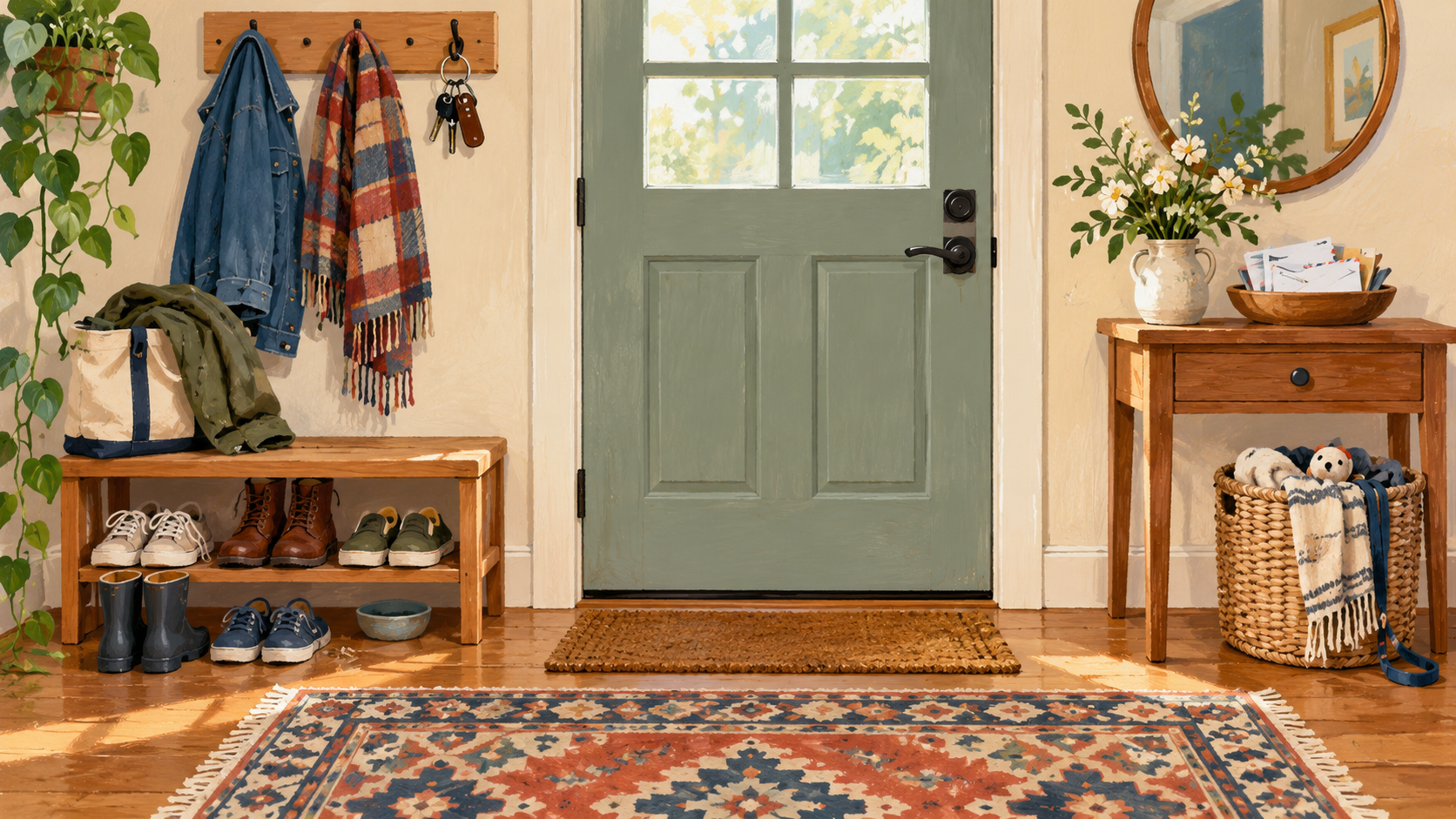
When I look at an interior picture, I try to imagine the next ordinary hour. Someone comes home, removes a coat, puts down a bag, makes tea and sits with a book. Where do those activities go? Does the room help, or does the imagined occupant immediately spoil the composition by being present?
Some sparse rooms work beautifully for the people who use them. They may enjoy the space, need few visible objects and have storage elsewhere. Wonderful. The problem is borrowing that person's arrangement as a universal instruction without borrowing their household, habits and practical conditions.
My rented flat holds a different life. A friend visits with a damp coat. A stack of books waits to return to the library. I want a lamp beside the chair because I actually read there. These things belong in the design question. They are not evidence that I failed to become sufficiently refined.
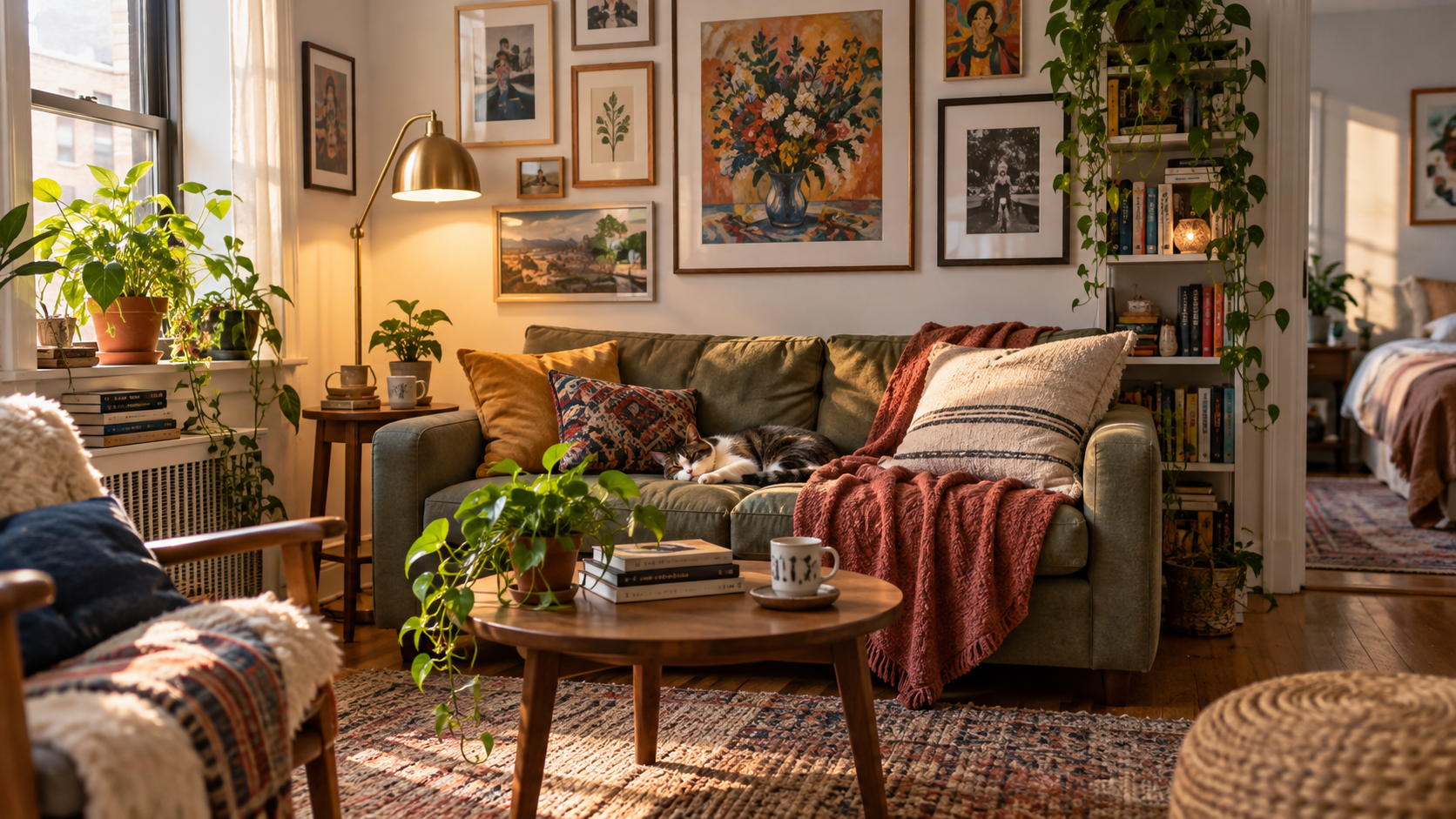
The wall above the sofa contains pictures of different sizes. I arranged them to make a relationship rather than a perfect match. One has a color I enjoy. Another reminds me of an afternoon with a friend. The room becomes calmer for me when familiar things have a sensible place, even if a camera would prefer fewer of them.
Comfort is allowed to have details
I begin changes by watching the activity I want to support. A better place for the mug. Light that reaches the page. Enough room to move without brushing past a corner. The useful questions are quite specific, and many can be answered with a reversible adjustment suited to a rental.
I check what the tenancy permits before altering surfaces or fittings. There are plenty of ordinary changes that begin with moving an existing object, choosing a more useful position or reconsidering what a corner is for. Buying a whole new mood is rarely the first necessary action.
Color can help me enjoy a room, but I do not expect it to solve every practical problem. A bright basket remains an awkward basket if it is in the wrong place. A restrained shelf can be excellent if it suits the objects I need to reach. The physical job and the visual preference deserve separate attention.
I also let the room evolve. A household changes, and an arrangement that worked a year ago may now be irritating. I would rather revise a familiar room than preserve a photograph of an earlier version of my life.
The beige room may be someone else's lovely home. I am happy for them. I would simply like the rest of us to retire the idea that being colorful, bookish or visibly occupied is a stage we should eventually grow out of.
My small wall has several pictures. The chair has a useful lamp. A cushion is making no effort to apologize for its pattern. I sit down and feel at home. That is the review I was trying to earn.

A thought worth keeping?